
A retaining wall has a big job: hold soil in place while fitting the look and conditions of your yard. The right material depends on wall height, drainage, soil, budget, and how much maintenance you want to handle. Houston’s heavy rain and clay-rich soils make water management especially important. Compare common options before you settle on a style, and consider the site—not just the sample—when deciding what belongs in your yard.
Concrete: Reliable and Flexible
Segmental concrete blocks are a popular choice for residential retaining walls. They come in different colors, textures, and shapes, so they can look clean and modern or resemble natural stone. Many systems use interlocking blocks, which can simplify installation and allow the wall to follow gentle curves.
Concrete blocks need little routine care beyond checking for movement, cracks, and drainage problems. Their suitability depends on wall height, soil pressure, and the manufacturer’s installation requirements. In Houston, a correctly designed drainage layer and outlet matter: trapped water can add pressure behind the wall, especially during heavy rain.
Natural Stone: A Distinctive Look
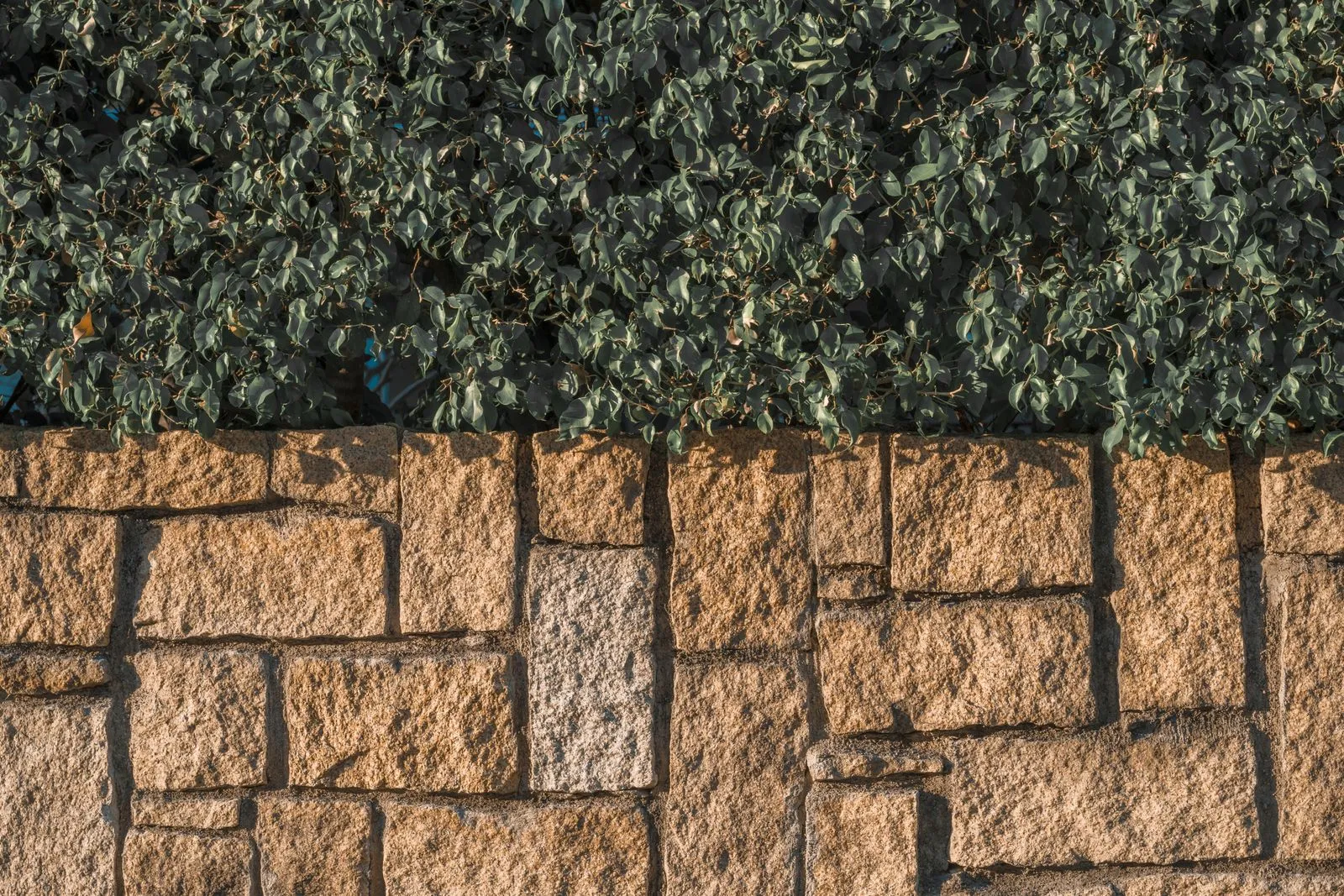
Natural stone brings varied color and texture that can blend with planting beds, patios, and established landscapes. Each piece has its own shape, so the finished wall feels less uniform than manufactured block. Stone can work well for garden walls and other projects where appearance is a priority and the site suits the design.
Stone walls may need occasional attention to loose pieces, shifting, or vegetation growing in joints. Material cost and installation effort vary with the stone and wall design. For a taller or load-bearing wall, don’t assume that stacking stones is enough; proper footing, drainage, and structural design are essential.
Brick and Timber: Know the Trade-Offs
Brick offers a classic, orderly appearance and can coordinate with brick homes or walkways. A retaining wall needs more than a decorative brick face: its structure, footing, and drainage must be designed to resist soil pressure. Check mortar joints over time, since water and movement can lead to deterioration that requires repair.
Timber can suit a casual garden and may be easier to shape around planting areas. However, wood can decay, warp, or attract insects when exposed to persistent moisture. Houston’s wet periods make drainage and material selection especially important. Compare the expected maintenance and service life for the specific product rather than choosing timber based on its lower-profile look alone.
Match Material to the Yard
Start by looking at the slope, wall height, soil, nearby structures, and where rainwater flows. Houston yards can include dense clay soils and areas that stay wet after storms. Ask how the design will direct water away from the wall, what drainage materials it needs, and whether runoff could affect a home, fence, or neighboring property.
Then weigh appearance against upkeep and the demands of the site. Concrete block suits many practical designs; stone creates a natural finish; brick can complement traditional architecture; timber offers a softer garden look but needs attention to moisture. For a significant grade change, a wall near a structure, or uncertain soil conditions, get a qualified professional to assess the design and any local requirements before work begins.
The best retaining wall material is the one that suits your yard’s drainage, slope, and style—not simply the one that looks best in a sample. Compare maintenance needs and structural requirements before committing. If you’re planning a wall in Houston, Bayou Wall Works can help you discuss options for your site.